A series of British 1945 tests assessing the lethality of the German 3cm cannon shells against aircraft. (Represented here partially)
Given that the 20mm shells common at the beginning of WWII contained about 10 grams of high explosive, the appearance of
these shells with up to 85 grams of explosive caused quite a stir, and looking through these tests it's obvious why - a single hit on a typical single or twin engined aircraft was enough to bring it down in most cases.
The downside was that the shells were fired at relatively low velocity, around 1750 feet per second, when most aircraft cannon were firing at least 1000 feet per second faster. This meant that while one hit could lethal, actually
scoring a hit was more difficult.
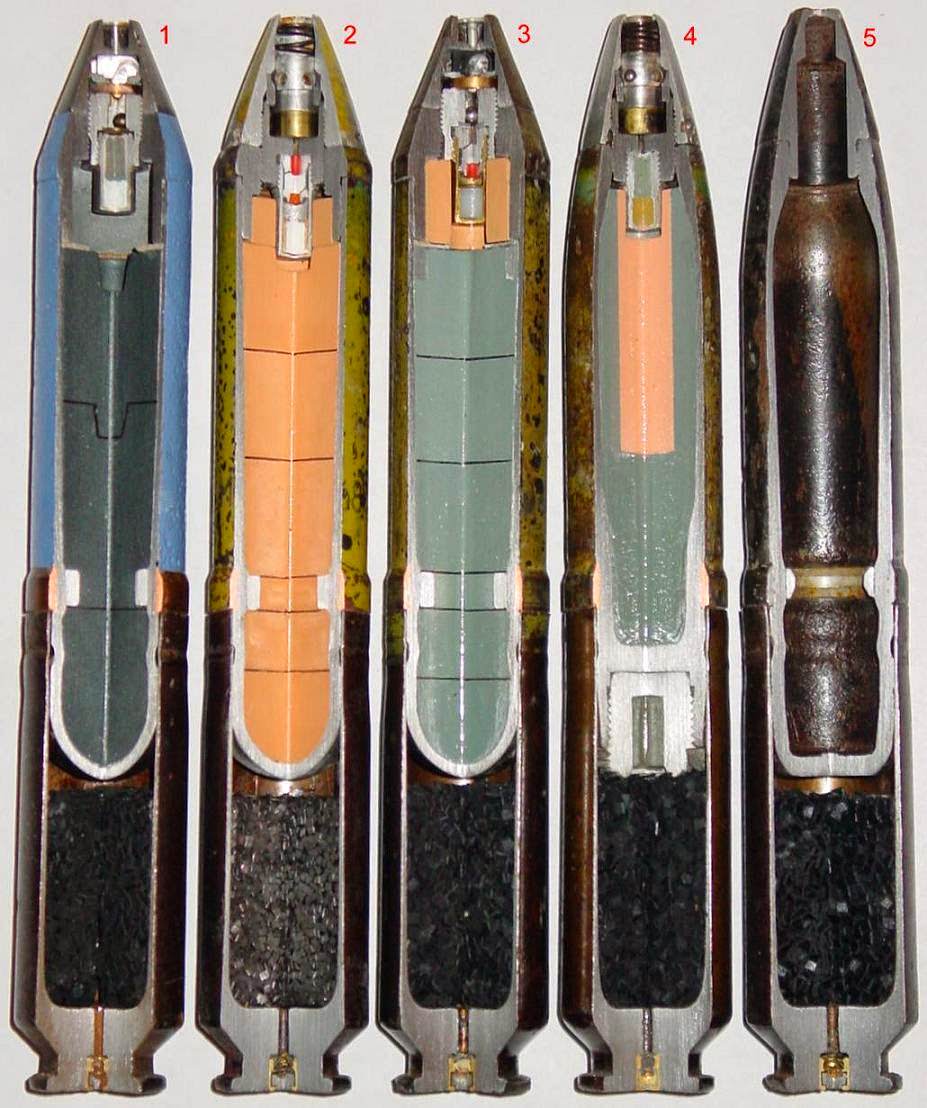
Some of the projectiles in question:
1- 3cm brandgranate ohne zerleger (3cm incendiary shell without self destruct element), a pressed steel body with a (typical for the mineshell) round bottom. The shellbody is filled with thermite, pressed in three degrees of
tightness, the less pressed amount in top. The shell is fuzed with the Az1587. After hitting the target, the shell's nose is blown off by the initial explosion of the nosefuze, after which it starts spewing fire like a roman
candle, about 1200º C hot. weight of shell : 330 ± 8 grams.
2- 3cm M Geschoß 108 ausführung A mit zerleger (3cm Mineshell 108 type A with self destruct mechanism). A Mineshell filled with 85 grams of penthrite and fuzed with the ZZ1589B (Zerlegezunder /self destruct fuze 1589B -mechanical-).
The shell could also be filled with 85 grams of HA41 (Hexogen Aluminium). Weight of shell : 330± 8 grams. Note that the shell has a different type of detonator, the VC70. This duplex detonator had a delay curcuit that delayed the
shell for about 10 cm of flightpath, enabeling it to enter the target before exploding inside of it.
3 - 3cm M geschoß ohne zerleger (3cm Mineshell without self destruct mechanism). A mineshell filled with 82 grams of Ha41 and a ring of 3 grams penthrite ,surrounding the VC70 detonator. The fuze used is the AZ1587.
4- 3cm M geschoß leuchtspur, mit zeleger (3cm mineshell with tracer and self delay). A Mineshell with a tracer element , used one on five in a belt for fire corrections. The shell is filled with 73 grams HA41 and a core of 3 grams
nitropenta. The fuze is an ZZ1589B, in fact a ZZ1589A with a smaller and more streamlinded outer body.
5- Type 5- A practice mineshell , resembling the 3cm M shell with tracer. The shell is not tarfilled to bring it to the right weight.
British Test
Targets: Spitfire MkIIB, equipped with armor and controls, but without engines
Shooting conditions: The wings were attacked directly from behind (direct astern), and the fuselage at an angle of rotation of 10 °
Details on test:
10 shots were fired (it is worth noting that the mortality of a single shot was evaluated in this and subsequent trials. In other words, damage from other shots are not taken into account when estimating the mortality of a shot).
The table with the results of the shelling:
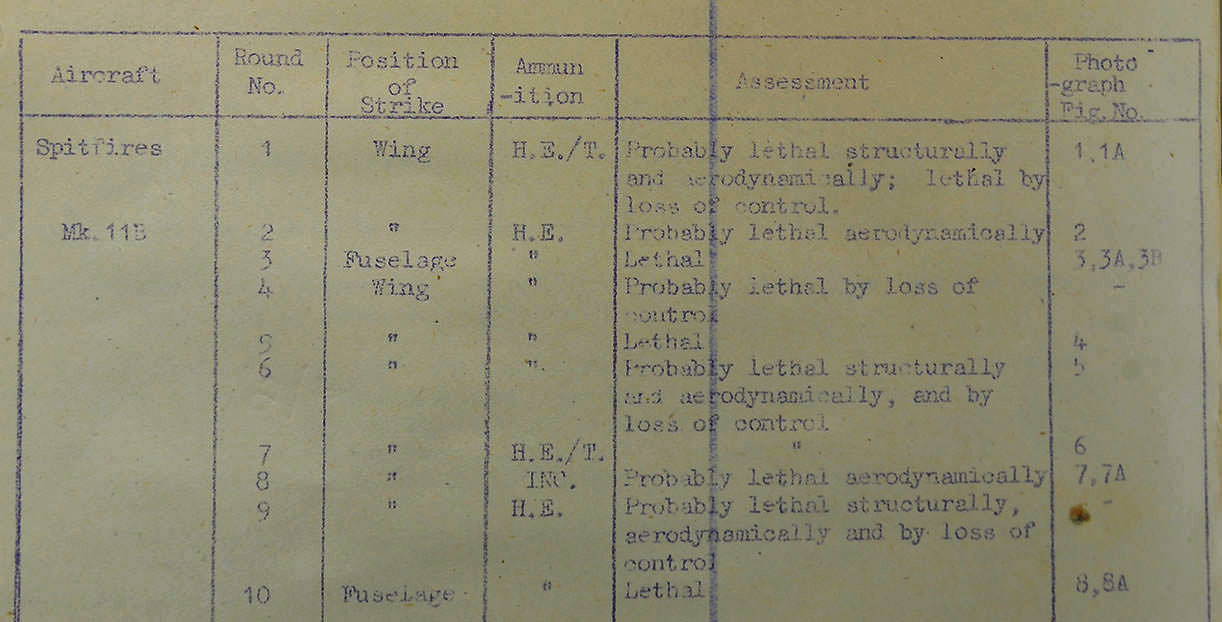
HE/T ammunition
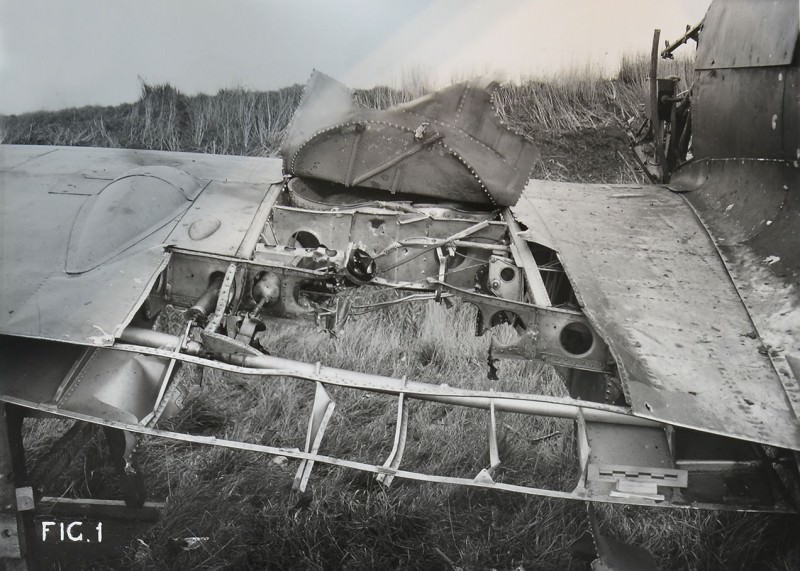 Fig1. "Probably lethal structurally and aerodynamically - lethal by loss of control"
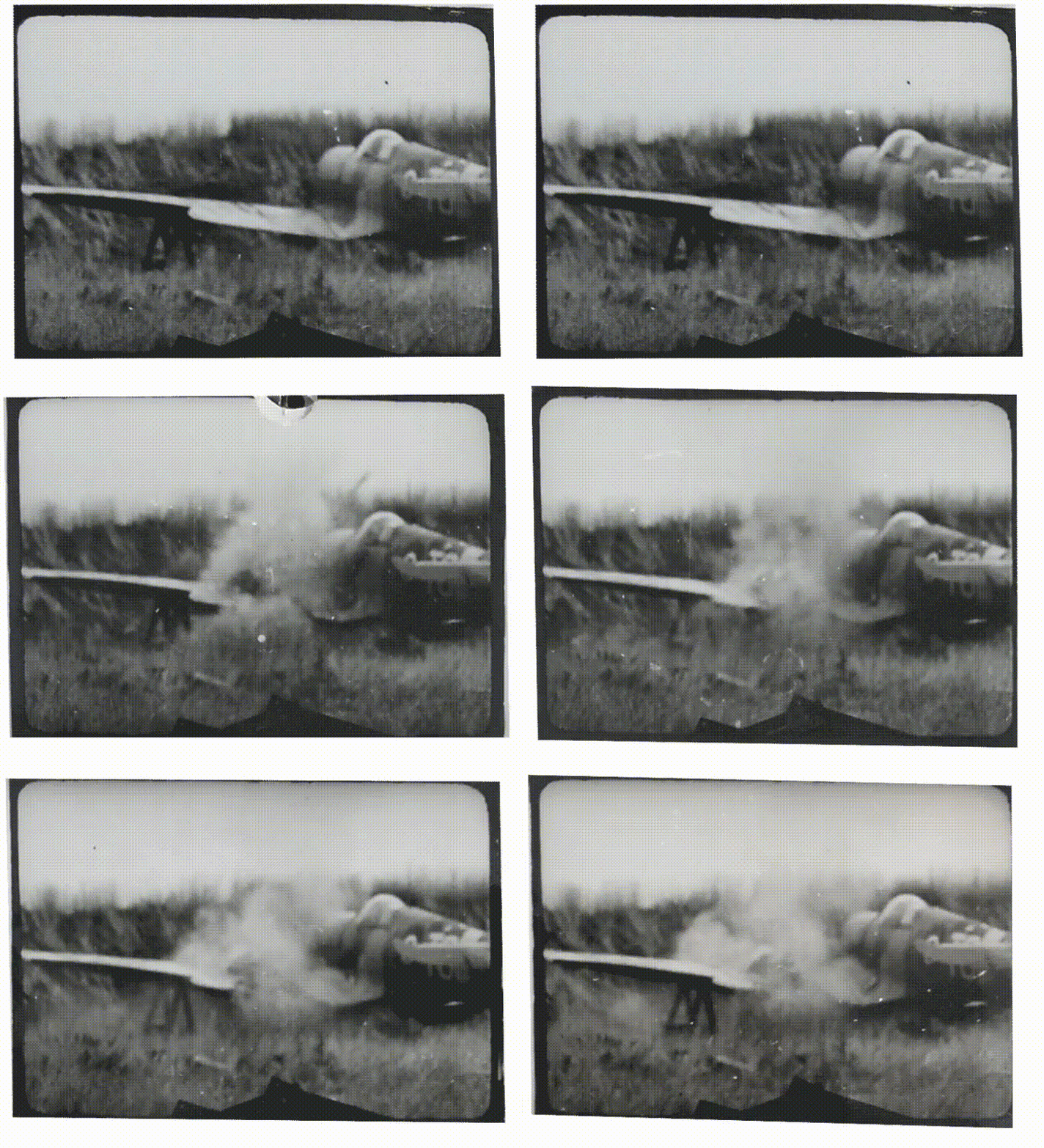 Video of the hit above with 30mm HE-T hit to a Spitfire Mk IIb single engined fighter wing"
HE ammunition
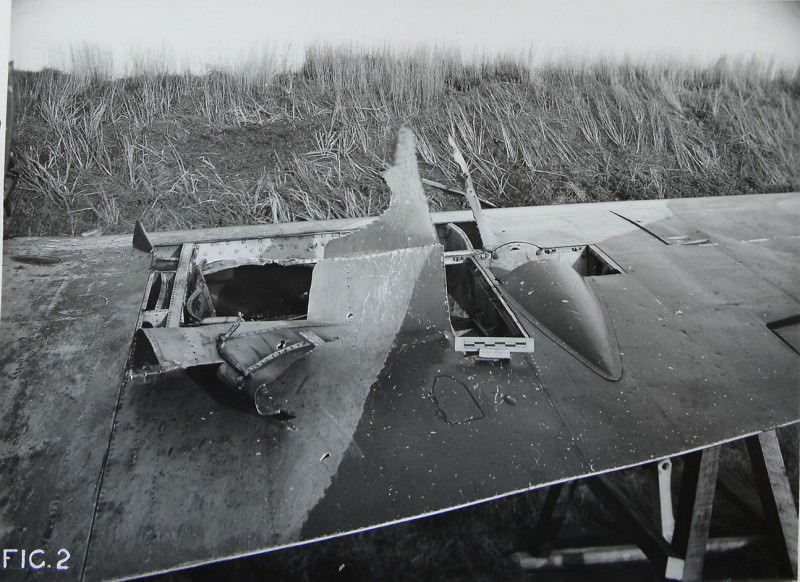 Fig.2 "Probably lethal aerodynamically"
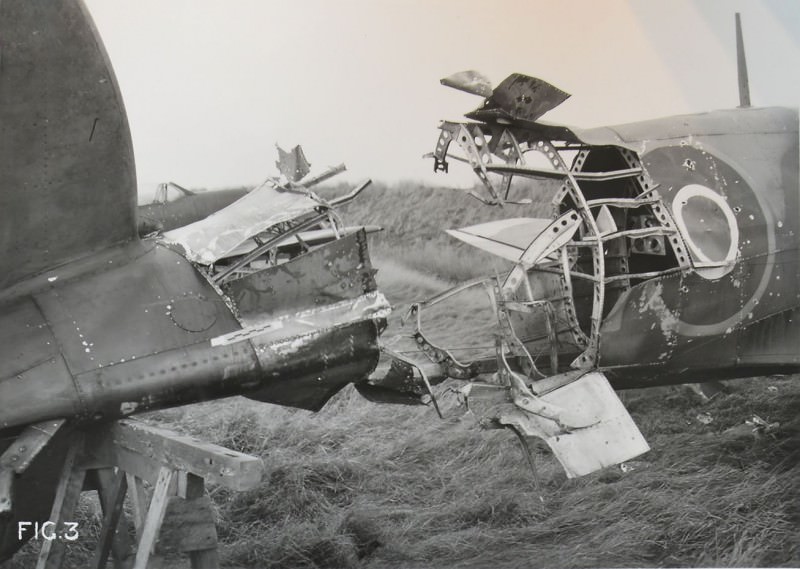 Fig.3 "Lethal"
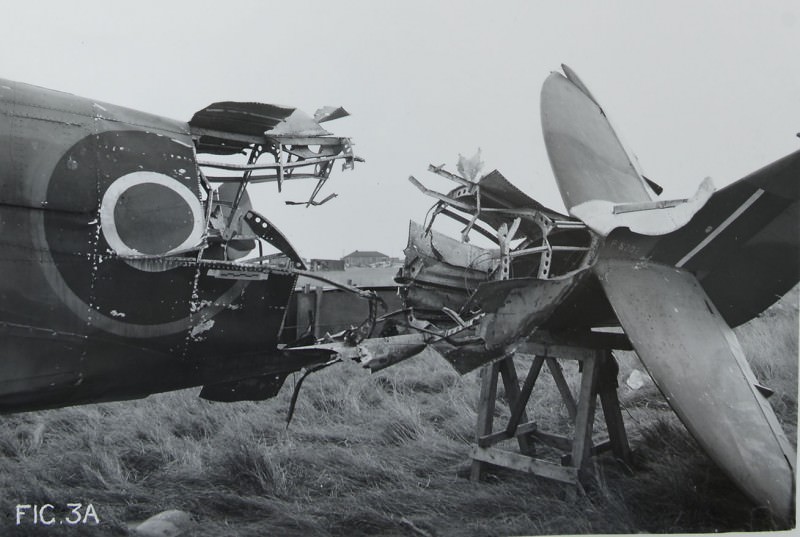 Fig.3A "Lethal"
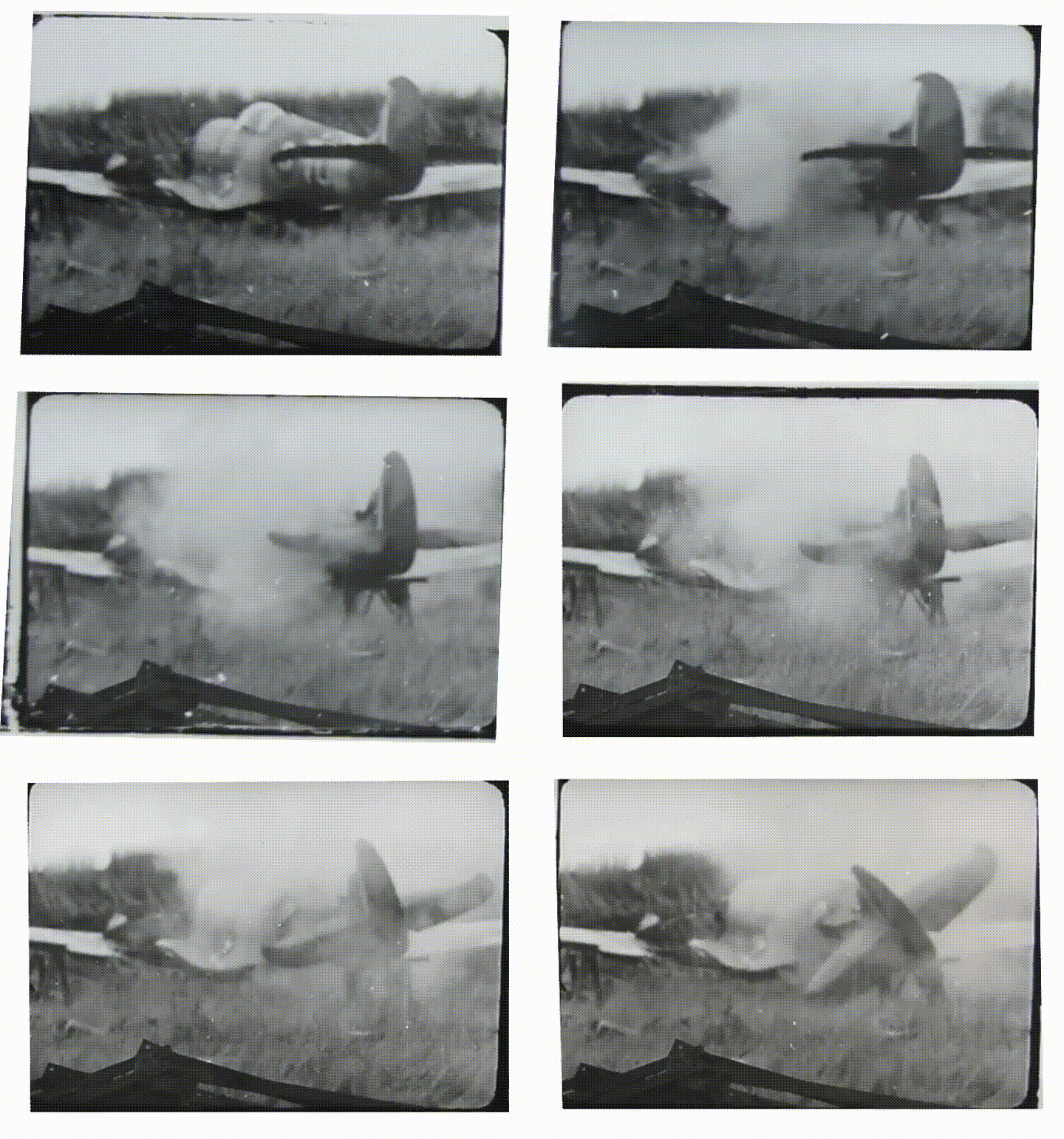 Video of Fig3. 30mm HE hit to the Spitfire fuselage blows it in half, even without the stress than would be on the aircraft in flight
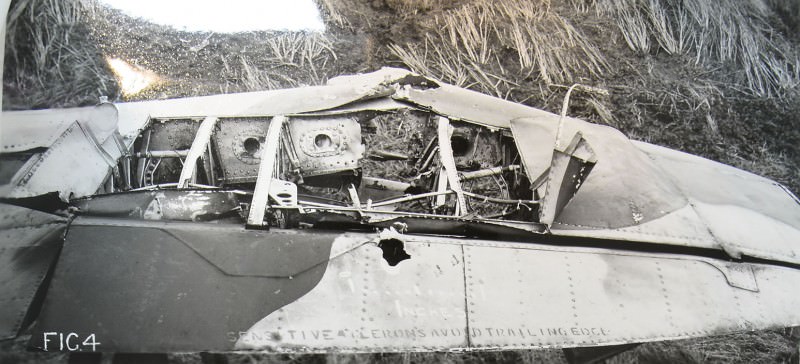 Fig.4 "Lethal"
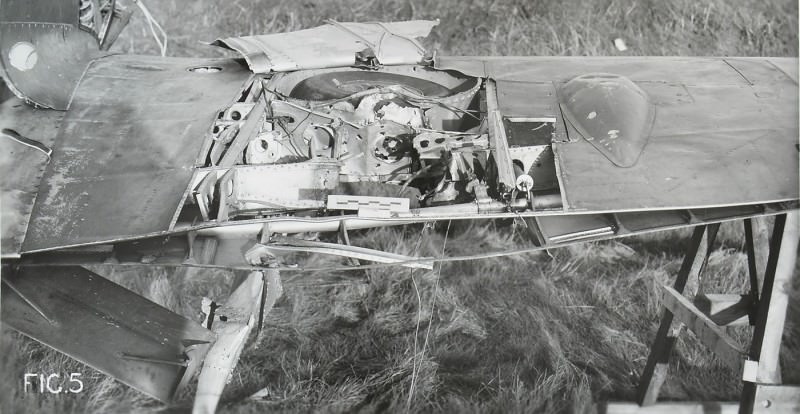 Fig.5 "Probably lethal structurally and aerodynamically, and by loss of control"
Note that 50 small fragments struck the cabin. Several of them would have hurt the pilot. Other Slightly damaged the Instrument panel
Fig.5 "Probably lethal structurally and aerodynamically, and by loss of control"
Note that 50 small fragments struck the cabin. Several of them would have hurt the pilot. Other Slightly damaged the Instrument panel

HE/T ammunition
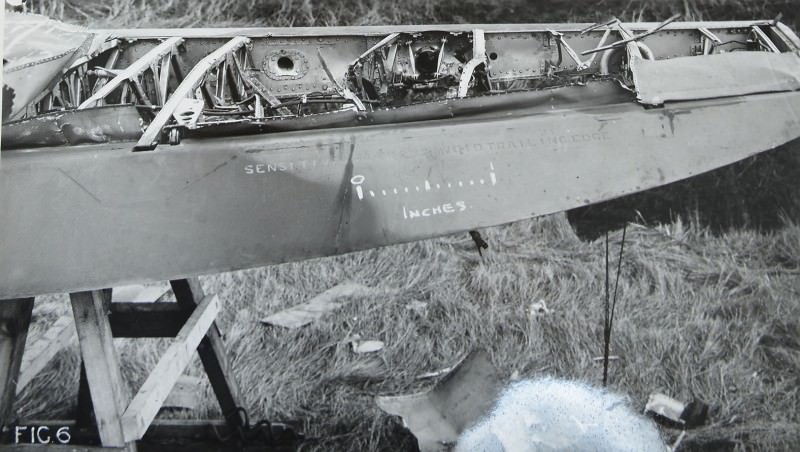 Fig6. "Probably lethal structurally and aerodynamically, and by loss of control"
Incendiary ammunition
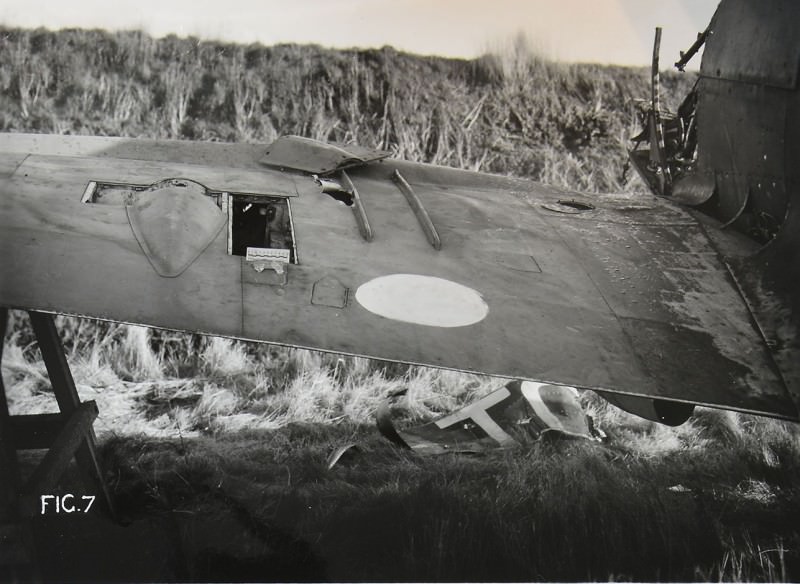 Fig7. "Probably lethal structurally aerodynamically"
30mm Incendiary hit to Spitfire wing, entry hole
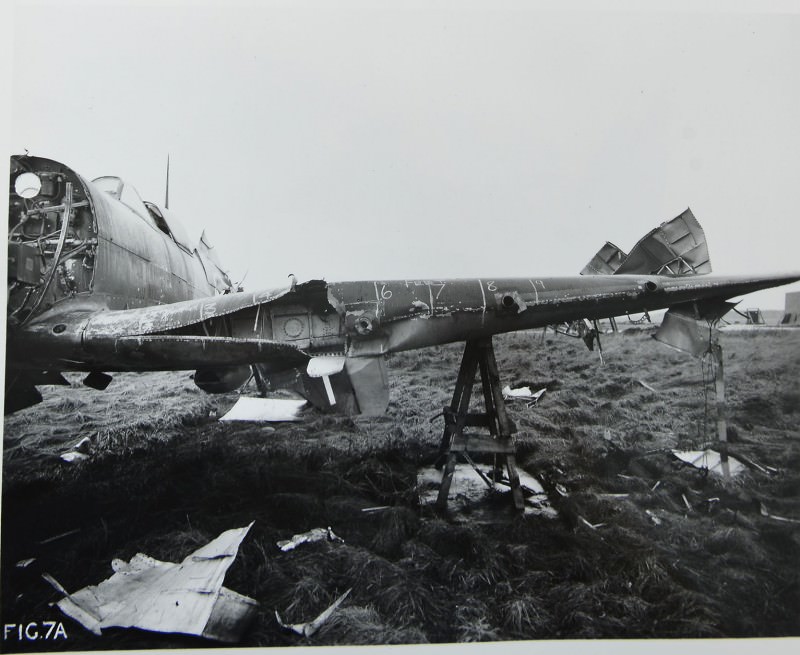 Fig7.A Incendiary exit hole
HE ammunition
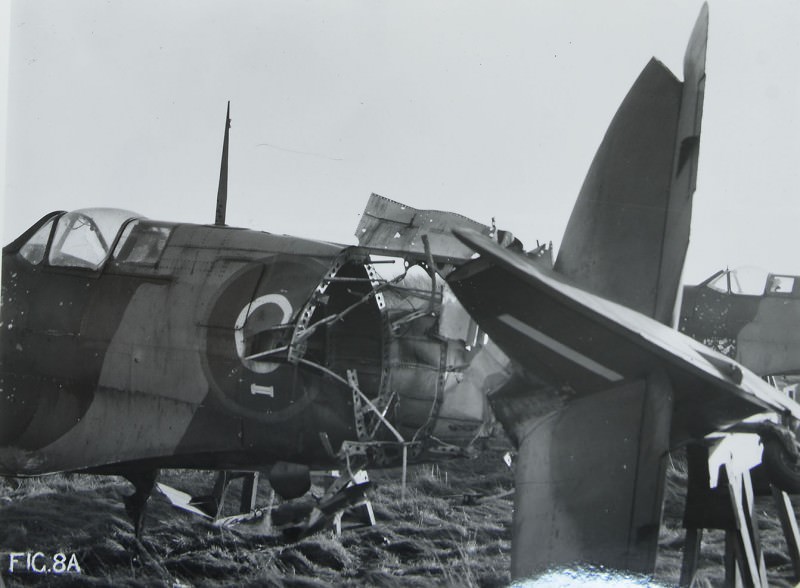
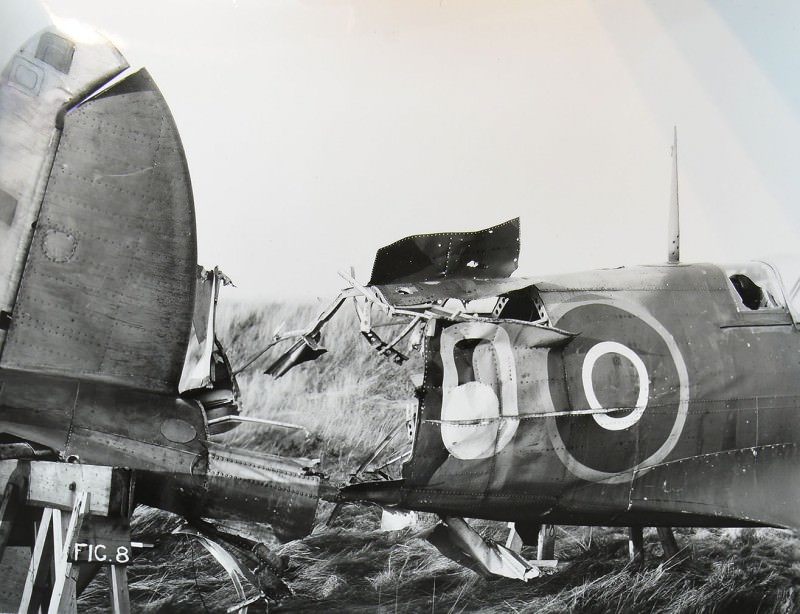 Fig8. and Fig8A. "Probably lethal structurally and aerodynamically, and by loss of control"
30mm against twin engined Medium Bomber
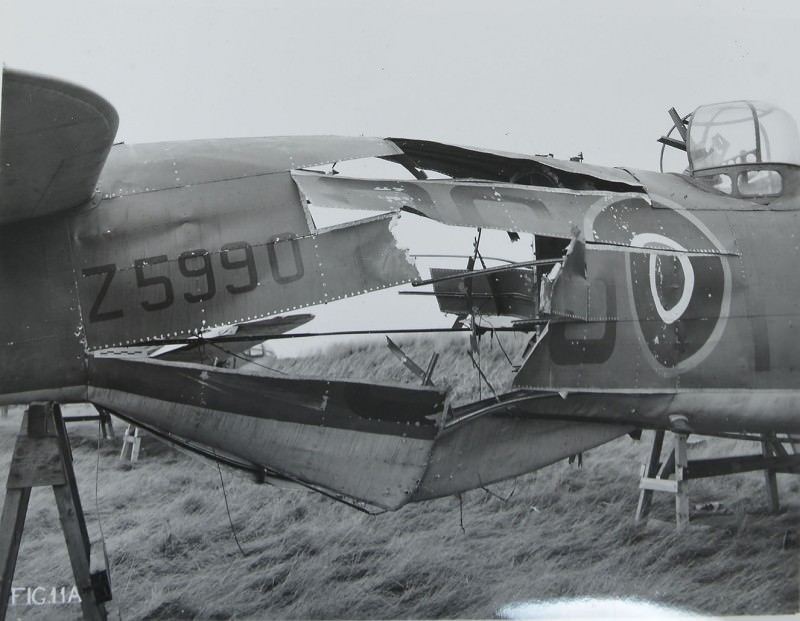
Targets: Blenheim IV , equipped with armor and controls, but without engines, fuel tanks filled with water
Shooting conditions: the wings were attacked directly behind, and the fuselage at an angle of rotation of 10 ° from this position.
Table with the shelling results:

HE ammunition
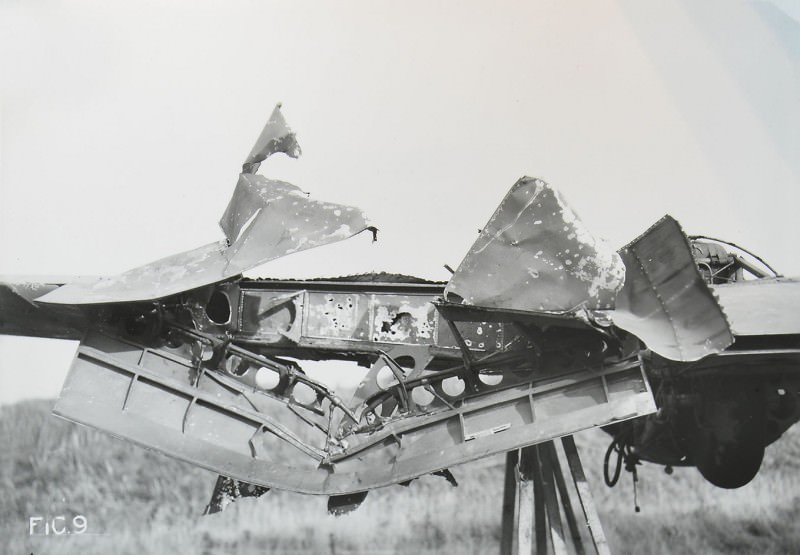 Fig9. "Probably lethal aerodynamically"
HE/T ammunition
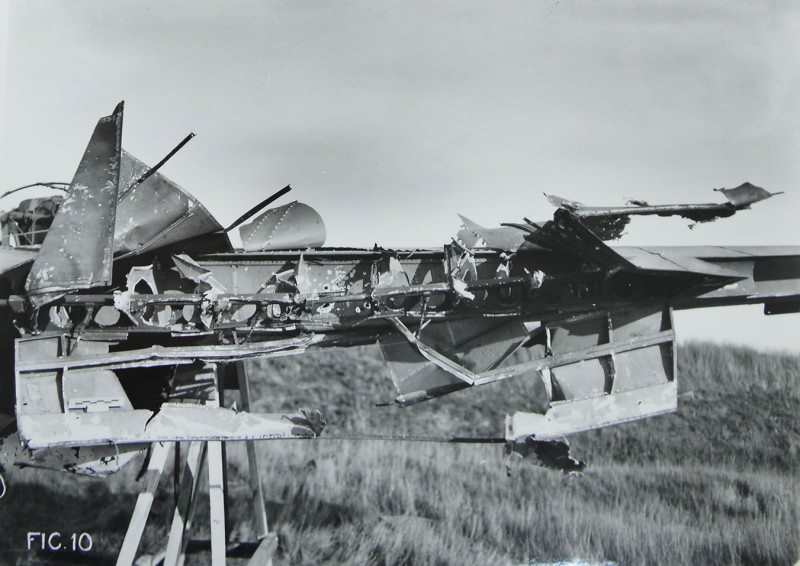 Fig10. "Probably lethal aerodynamically"
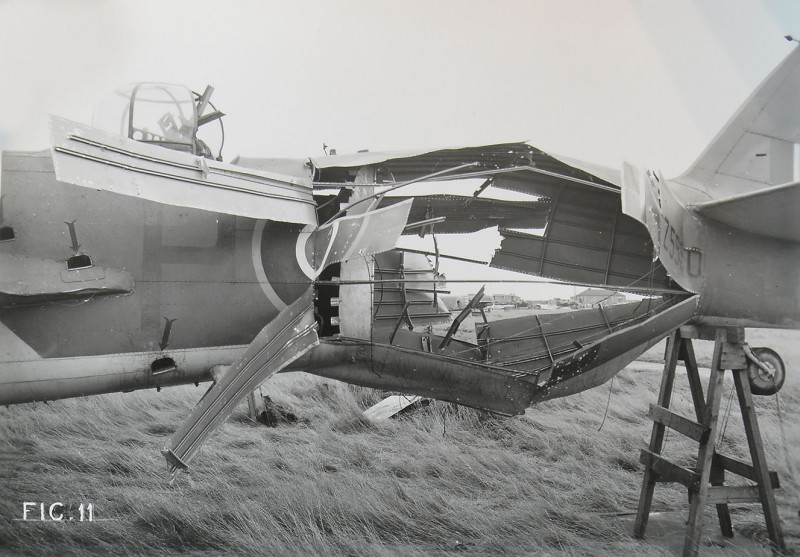 Fig11. and Fig11.A "Lethal"
Incendiary ammunition
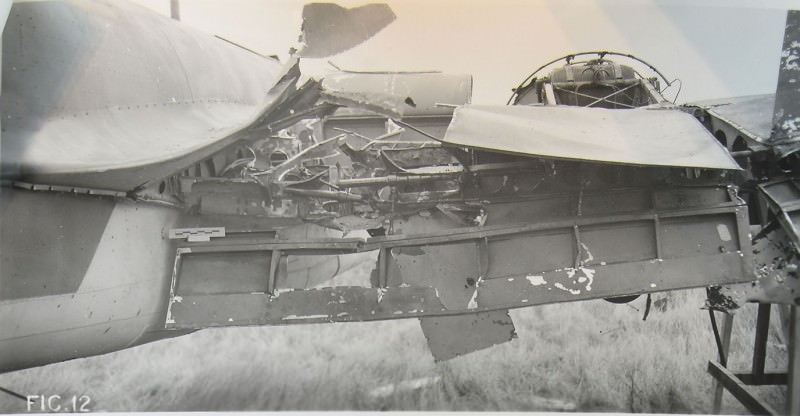 Fig12. "Doubtful aerodynamically"
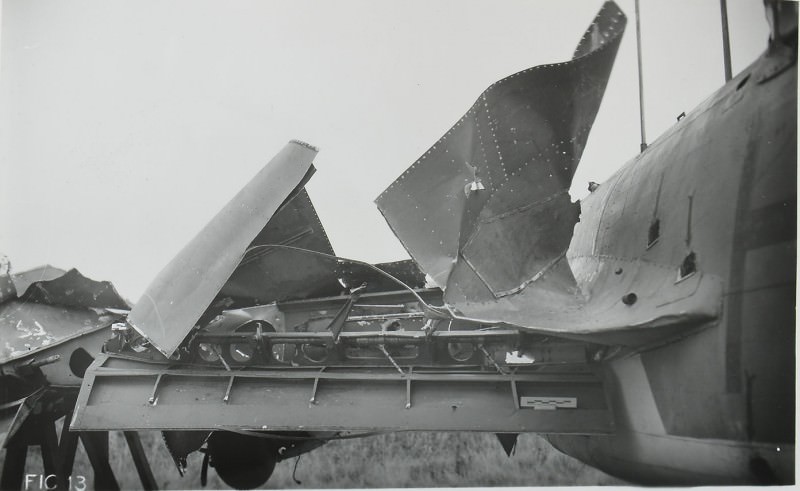 Fig13. "Probably lethal aerodynamically and by fire"
HE ammunition
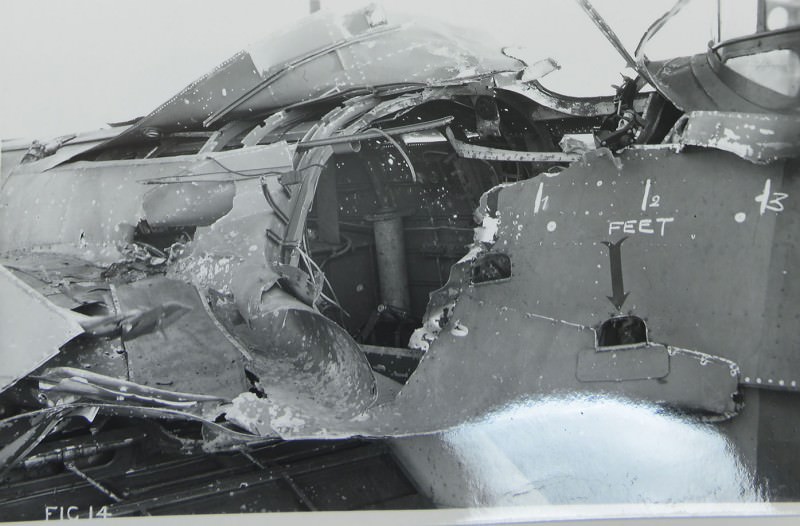 Fig14. "Lethal"
HE/T ammunition
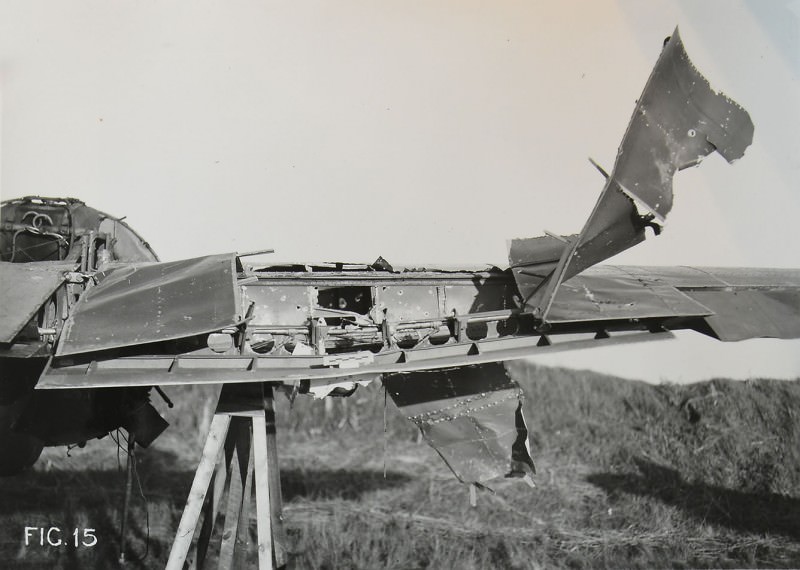 Fig15. "Probably lethal aerodynamically also small fire risk (if tank is fitted)"
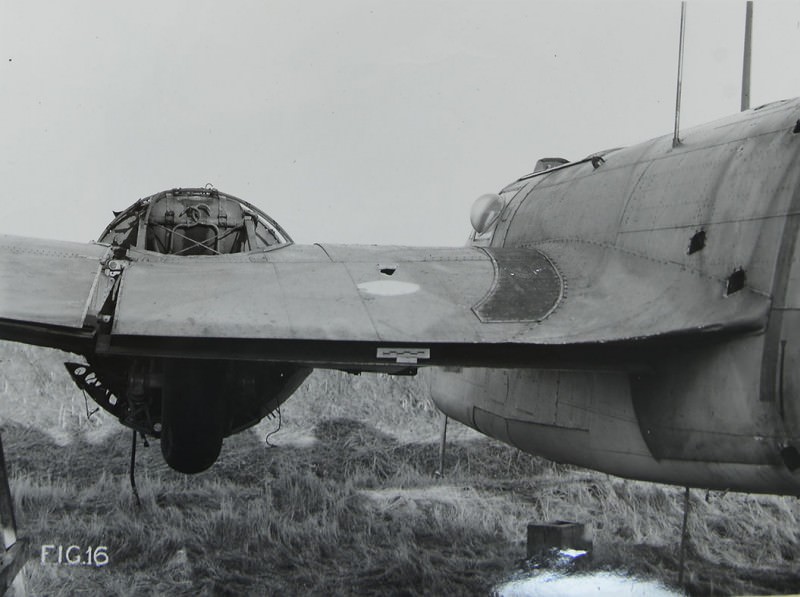 Fig16. "Probably lethal by fire"
HE ammunition
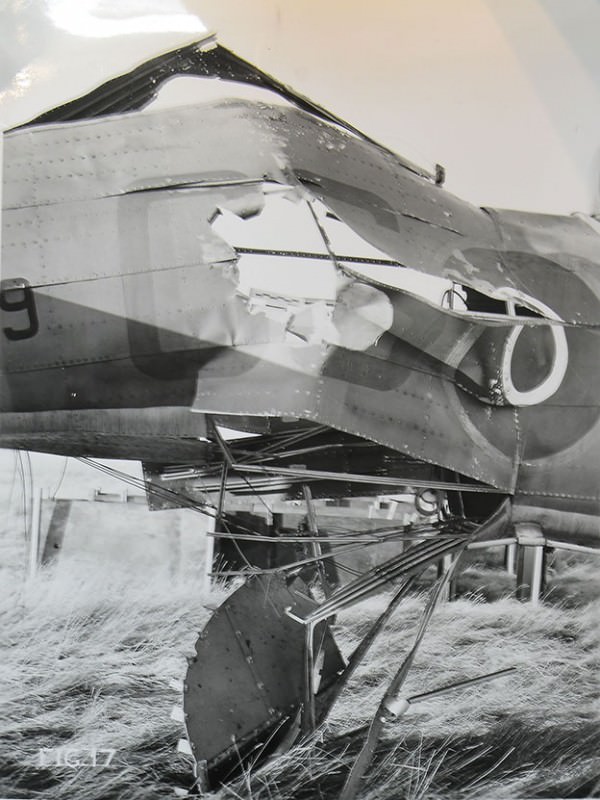 Fig17. and Fig17A. "Lethal"
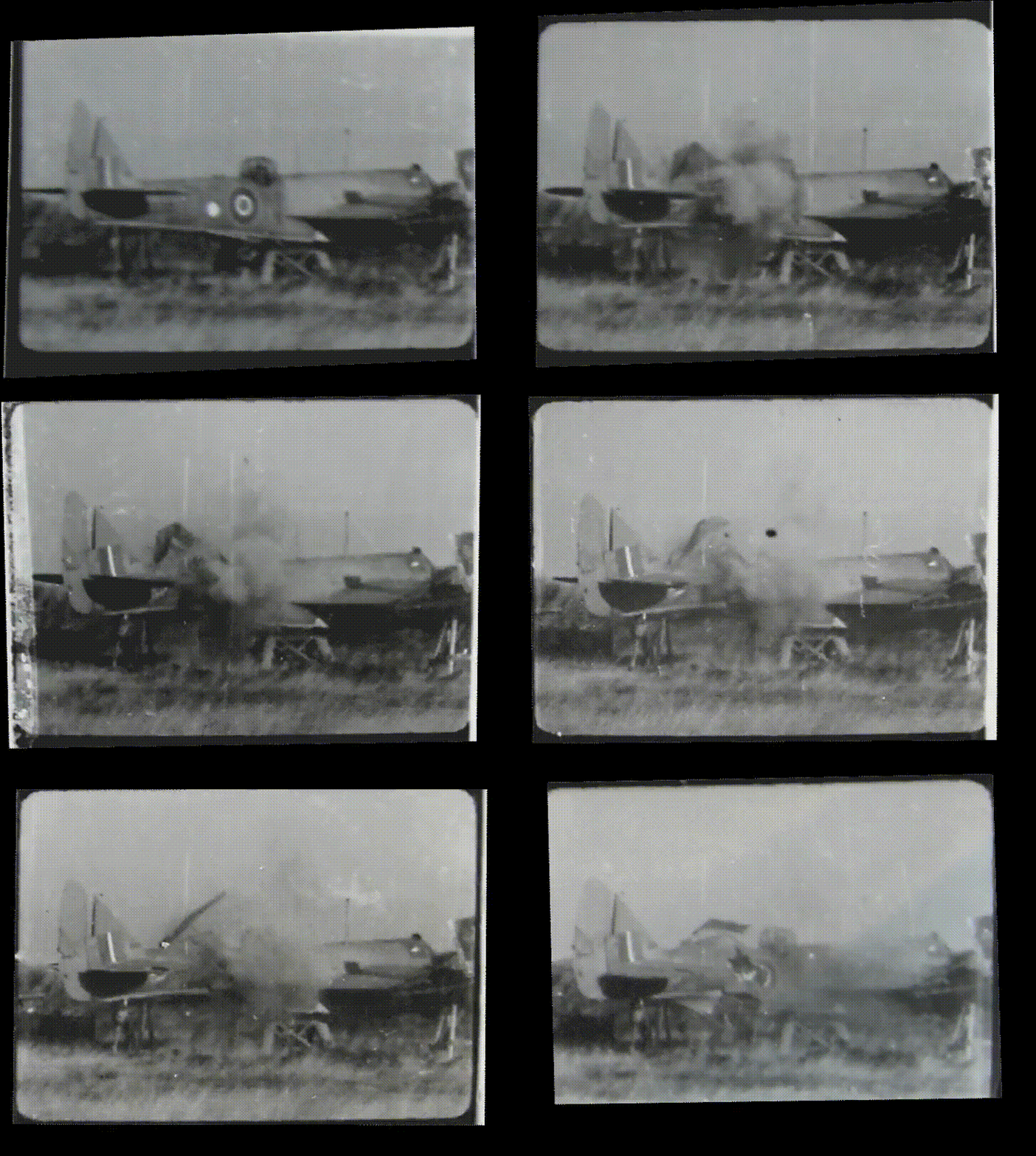 Video of the 30mm HE hit to Blenheim fuselage, such a hit in flight would have cut the aircraft in half.
Trials of German 30mm Ammunition, Gordon, HWB and Macdonald, JA, Orfordness reseach station FT343, May 1945, AVIA 6/13481
30mm Ammunition, Gordon, HWB, Orfordness reseach station FT359, August 1946, AVIA 6/13497
Trials of Aden 30mm, HWB and Smith, AE, Technical Note No. Arm.440 Orfordness reseach station FT377 , July 1950, AVIA 6/16186